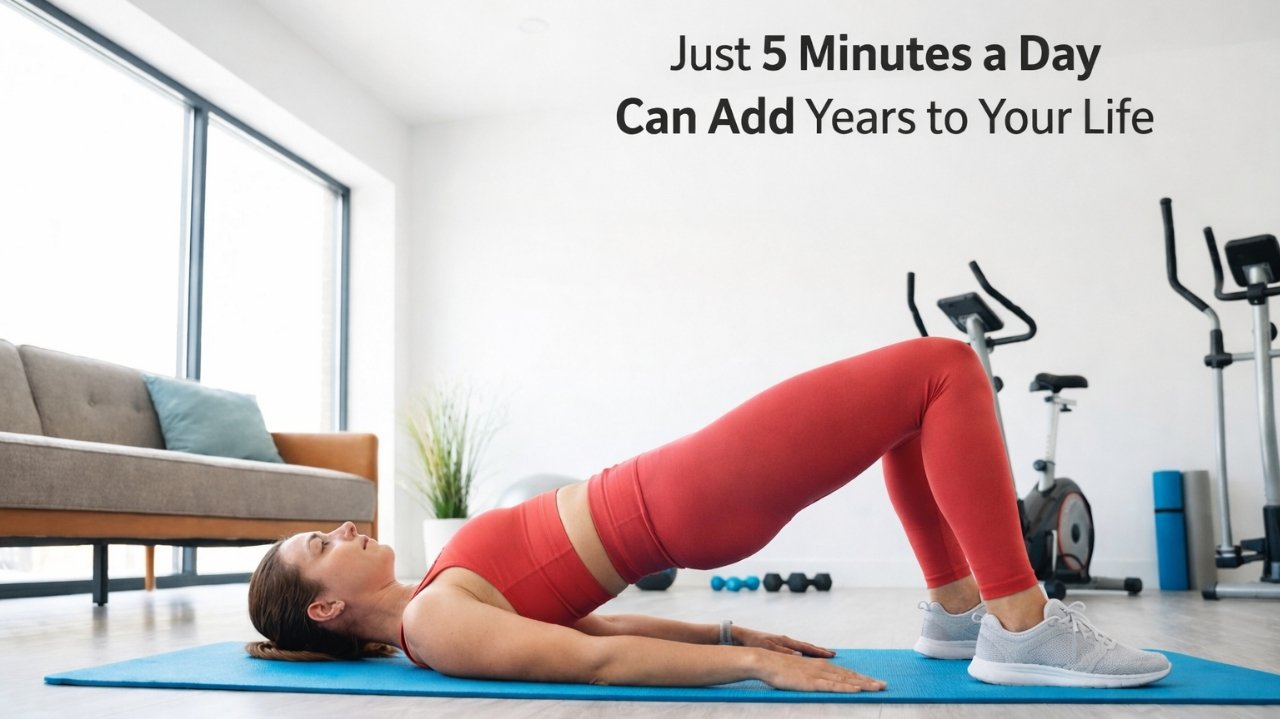
A major study published in The Lancet analysed data from nearly 95,000 middle-aged and older adults in the UK, along with 40,000 participants from Norway, Sweden, and the United States. Researchers found that even five extra minutes of moderate-to-vigorous physical activity per day was linked to a 10 per cent reduction in overall mortality risk.

The findings highlight an encouraging message: every bit of movement counts, even on busy days.
Cutting Back on Sitting Time Matters
The UK-based data, drawn from the UK Biobank, also showed that reducing daily sitting time by just 30 minutes could prevent around 4.5 per cent of deaths among adults who are not already highly active.

With many people spending long hours seated at desks or on screens, the research reinforces the importance of building short movement breaks into everyday routines.
Five Easy Exercises You Can Do at Home
Pilates, barre, and strength trainer Tara Riley recommends five simple exercises that require no equipment and can be completed in short bursts throughout the day.
1. Squats
“Squats are especially helpful if you sit for long periods,” Riley explains. They strengthen the legs, activate the glutes, and improve mobility.
Stand with your feet hip-width apart, push your hips back, and keep your weight through your heels. Using a chair as a guide can help with form. For added intensity, try small pulses at the bottom of the movement.
2. Plank Variations
Planks build core strength and stability, engaging the shoulders, hips, and abdominal muscles at the same time.
Beginners can start on hands and knees, briefly lifting the knees off the floor. As strength improves, aim to hold a plank for around 20 seconds, focusing on controlled breathing.
3. Hip Mobility Exercises
Tight hips are common, particularly for people who sit for much of the day. Riley recommends adding hip mobility movements to maintain joint health.
Simple leg swings and hip circles can be done anywhere. Hold onto a wall or chair, swing one leg forward and back for 15 to 20 repetitions, then repeat side to side. Finish with slow circular movements through the hip.
4. Tabletop Toe Taps
This exercise targets the deep core muscles, which support posture and reduce strain on the lower back.
Lie on your back with your legs raised in a tabletop position. Lower one toe to the floor at a time, then return to the starting position. Keep the movement slow and controlled, avoiding arching the back. For more challenge, lift the head and shoulders slightly.
5. Shoulder Glides
Shoulder mobility is essential for upper-back health, especially for people who work at desks.
Stand with your back against a wall, keeping the head and shoulder blades in contact. Raise the arms overhead with the backs of the hands against the wall, then slowly draw the elbows down toward the waist, maintaining contact throughout.
Why Small Movements Make a Big Difference
The research makes one thing clear: you do not need long or intense workouts to see health benefits. A few minutes of movement spread throughout the day can improve strength, mobility, and overall longevity. Incorporating short exercises like these into daily life may be one of the simplest ways to support better health over time.