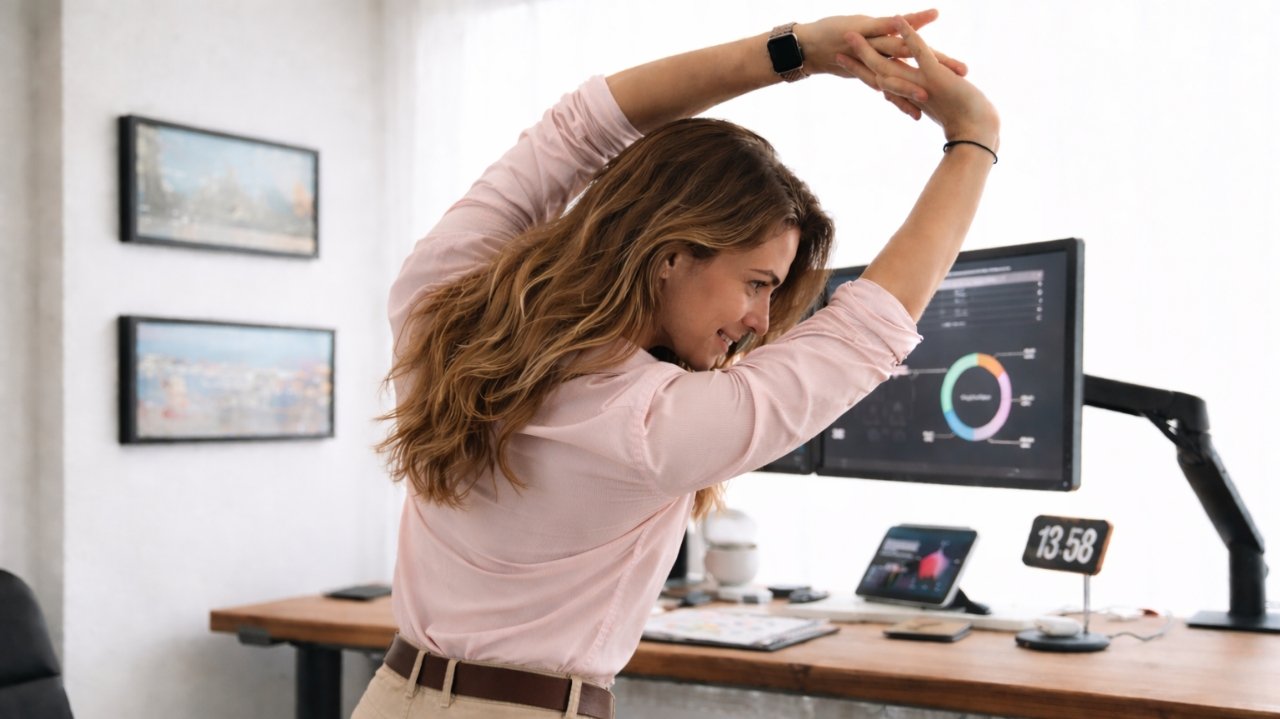
These short bursts of movement are known as exercise snacks. They usually last between 20 seconds and one minute and are performed several times throughout the day. Activities such as brisk stair climbing, bodyweight squats, fast walking or wall push-ups all qualify. The key is that they are done with enough intensity to raise your heart rate and make you slightly out of breath.

Unlike traditional workouts, exercise snacks are not completed in one continuous session. Instead, they are spaced out across your waking hours and fit naturally into everyday life. This makes them far easier to maintain, especially for people who struggle to commit to longer workouts.
What Makes Exercise Snacks Different
Exercise snacks are often compared to high-intensity interval training (HIIT), but the two are not the same. HIIT typically involves several intense bursts performed back-to-back within a single workout session. Exercise snacks, on the other hand, are spread throughout the day and separated by hours of normal activity such as working, commuting or relaxing at home.

Think of exercise snacks as grazing rather than sitting down for a full meal. Each snack is small on its own, but together they add up to meaningful health benefits.
Why Exercise Snacks Are So Effective
One of the biggest reasons people fail to meet physical activity guidelines is a lack of time and motivation. Exercise snacks directly address both issues. They don’t require special equipment, gym memberships or even a change of clothes. More importantly, they feel achievable.
Scientific studies consistently show that short bursts of vigorous activity can improve cardiorespiratory fitness, which reflects how well your heart and lungs work. This type of fitness is strongly linked to reduced risk of heart disease, better overall health and longer life expectancy.
Another major advantage is adherence. Research suggests people are far more likely to stick with exercise snacks compared to longer workout routines. When something feels manageable and fits easily into daily life, it becomes a habit rather than a chore.
Big Health Benefits From Very Little Time
Current health guidelines often recommend at least 150 minutes of moderate exercise per week. While this remains a valuable goal, recent evidence suggests that much smaller amounts of vigorous activity can still deliver significant benefits.
Studies have found that people who added just a few minutes of intense movement to their day experienced improvements in fitness, even if they were previously inactive. Large population studies also show that as little as three to four minutes of vigorous activity per day is associated with a lower risk of early death, particularly from cardiovascular disease.

Exercise snacks may also support metabolic health. Short bursts of intense activity performed before meals have been shown to reduce post-meal blood sugar spikes, which is especially beneficial for people with insulin resistance or those at risk of type 2 diabetes.
The Best Exercise Snacks to Try
One of the strengths of exercise snacks is their flexibility. You can choose movements that suit your environment, fitness level and schedule.
Stair Climbing
Stair climbing is one of the most researched and effective exercise snacks. Climb stairs briskly for 20 to 60 seconds, two or three times a day. The pace should be fast enough that you are breathing hard by the time you reach the top.
Brisk Walking
Walking bursts also count, as long as the pace is vigorous. A one-minute fast walk around your office, home or neighbourhood can raise your heart rate and improve fitness. If you can easily hold a conversation, the pace is probably too slow.
Bodyweight Exercises
Simple bodyweight movements such as squats, lunges, wall push-ups or chair sit-to-stands can be done almost anywhere. One short set of 8 to 12 repetitions is often enough to increase heart rate and activate major muscle groups.
Intensity matters more than duration. Even very short sessions can be effective when repeated regularly throughout the day.
How to Make Exercise Snacks a Daily Habit
The easiest way to stay consistent is to link exercise snacks to habits you already have:
- Climb the stairs before your morning tea or coffee
- Do squats while the kettle boils
- Take a brisk walk after finishing a work call
- Move during TV advert breaks
You don’t need to be perfect. Missing a snack or two doesn’t matter. What matters is doing something regularly.
A Practical and Sustainable Way to Stay Active
Exercise snacks are not a replacement for a full fitness programme, especially if you have specific training goals. However, for people who struggle to find time or motivation for traditional workouts, they offer a realistic and science-backed alternative.
The biggest improvements in health happen when someone moves from doing nothing to doing something. Even small amounts of movement can have a powerful impact when done consistently. So the next time you find yourself with a spare minute, take it as an opportunity to move. Over time, those small efforts can add up to better fitness, better health and a stronger heart.