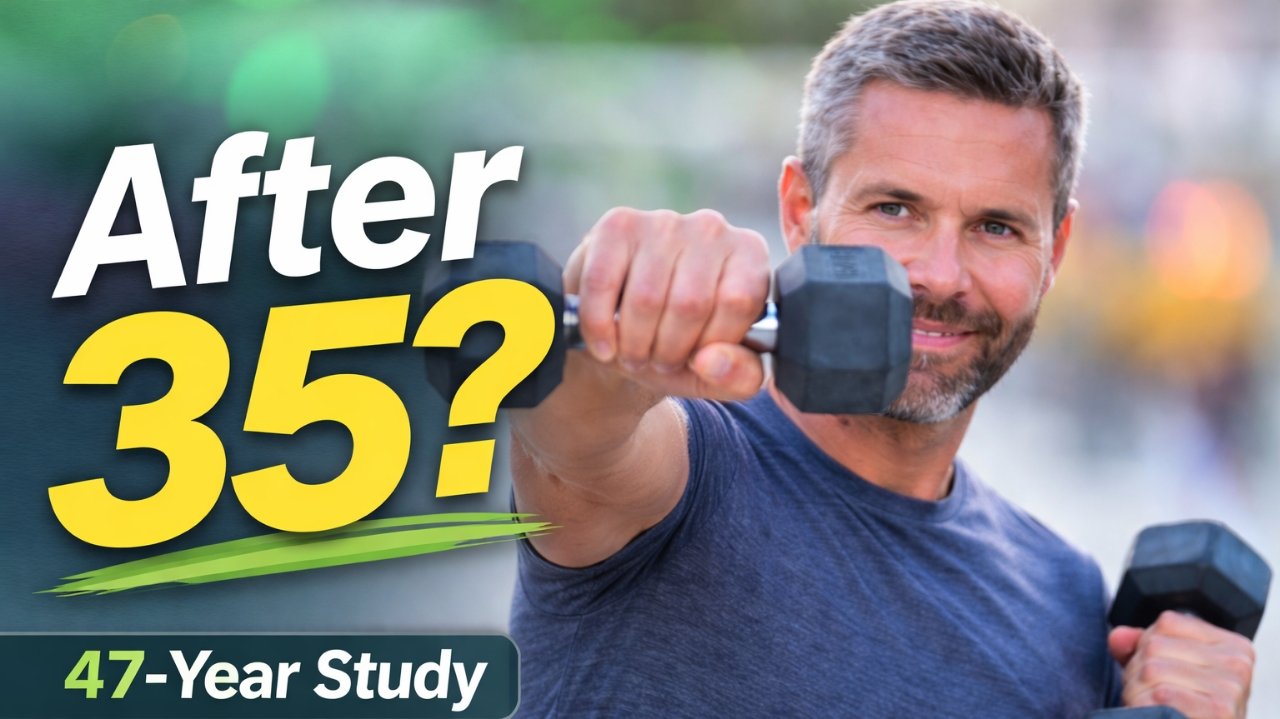
The research, carried out by , followed participants for nearly five decades. By tracking the same individuals over such a long period, scientists gained rare insight into how physical capacity changes throughout adulthood.

Also Read – 7 Simple Yoga Poses That Help Improve Flexibility Faster

When Does Physical Decline Start?
According to the study, overall fitness and muscular strength peak around the age of 35. After this point, a slow and steady decline begins. In the early years, these changes may be subtle and easy to ignore, but they become more noticeable as people move through midlife and into older age.

What makes this research especially valuable is its design. Most previous studies compared different age groups at a single moment in time. In contrast, this study followed the same people for 47 years, allowing researchers to observe real, long-term changes rather than short-term comparisons.
The findings show that:
- Aerobic fitness, muscle strength, and endurance all start to decline after the mid-30s
- The rate of decline increases gradually with age
- Being very fit in youth does not completely prevent later physical decline
These results suggest that aging-related changes in physical performance are a natural process shared by most adults worldwide.
The Positive Side: Exercise Still Works
Despite the reality of age-related decline, the study delivers an encouraging message: physical activity remains beneficial at every stage of adulthood.
Participants who were not highly active earlier in life—but began exercising later—showed improvements of 5 to 10 percent in physical capacity. While this may sound modest, such gains can have a major impact on daily functioning, mobility, and independence, especially as people age.
Lead author explained that while exercise cannot completely stop the biological aging process, it can significantly slow the loss of physical performance and help individuals maintain better overall function for longer.
Why These Findings Matter Globally
Across the world, people are living longer than ever before. At the same time, modern lifestyles often involve long hours of sitting, reduced physical labor, and limited daily movement. This combination increases the risk of muscle weakness, reduced endurance, and chronic health conditions.

The study reinforces several globally relevant health messages:
- Regular physical activity is essential beyond early adulthood
- Midlife is a critical period for maintaining strength and endurance
- Starting exercise later is far better than remaining inactive
These insights are particularly important for public health planning, aging populations, and individuals who believe they may have “missed their chance” to improve fitness.
What Kind of Activity Makes a Difference?
Although the study did not focus on specific workout routines, existing scientific evidence supports a balanced approach to physical activity:
- Aerobic exercises such as walking, cycling, or swimming improve heart and lung function
- Strength training helps preserve muscle mass and bone density
- Balance and functional movements reduce the risk of falls and injuries
Health experts generally recommend combining these forms of activity regularly rather than focusing on just one type.
Aging Is Natural, Inactivity Is Not Inevitable
One of the most important lessons from this research is the difference between natural aging and avoidable physical decline. While no one can completely stop age-related changes, lifestyle choices play a major role in how quickly physical abilities fade.
Participants who stayed active—or became active later in life—maintained higher levels of physical performance compared to those who remained inactive. Even moderate, consistent movement proved more beneficial than occasional intense effort.
This means that simple habits, such as daily walking, light resistance exercises, or recreational physical activities, can support long-term health.
What Comes Next in the Study?
The research is ongoing. Scientists plan to examine participants again as they reach their late 60s, with the goal of understanding how physical performance, lifestyle factors, and biological aging interact over time.
The findings have been published in the respected , highlighting their scientific credibility and global relevance.
Final Thoughts
This 47-year study delivers a clear and reassuring message for adults everywhere:
- Physical fitness and strength begin to decline around age 35
- The decline is gradual and varies between individuals
- Regular physical activity can slow this process at any age
Whether someone is in their 30s, 50s, or beyond, moving the body consistently remains one of the most effective ways to protect health, independence, and quality of life. Aging is inevitable—but staying active gives people the power to age better, stronger, and healthier.